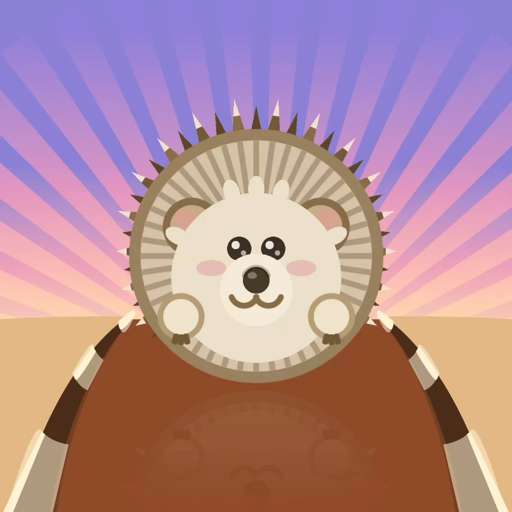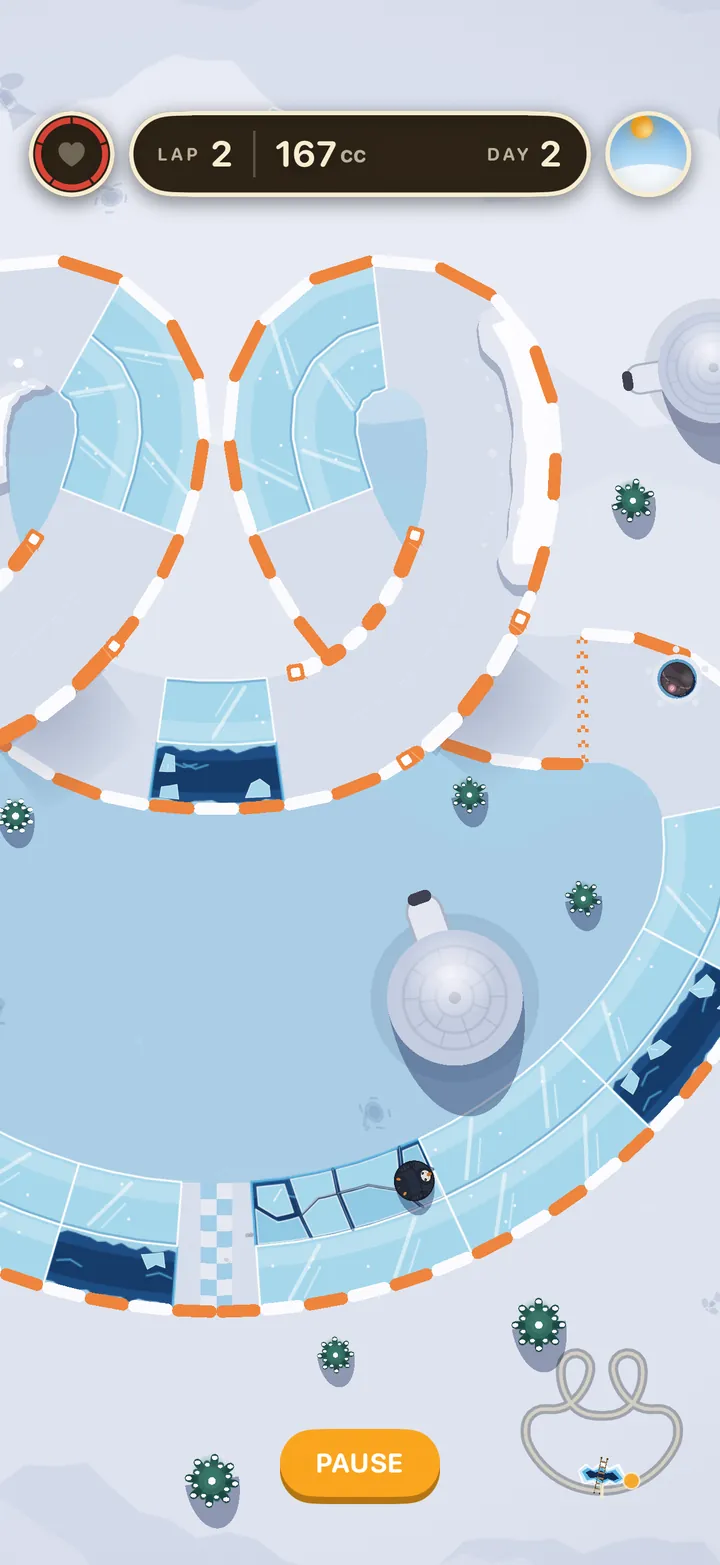
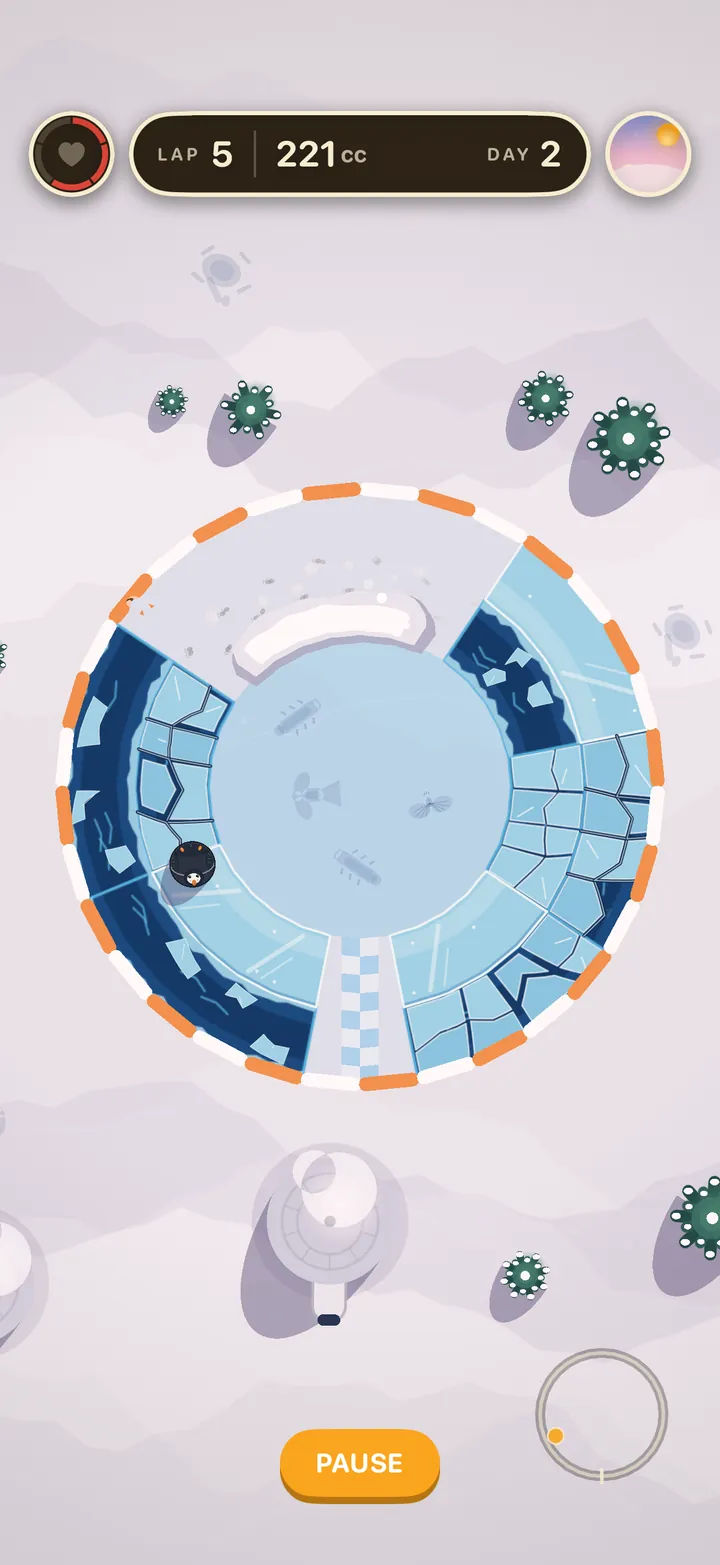
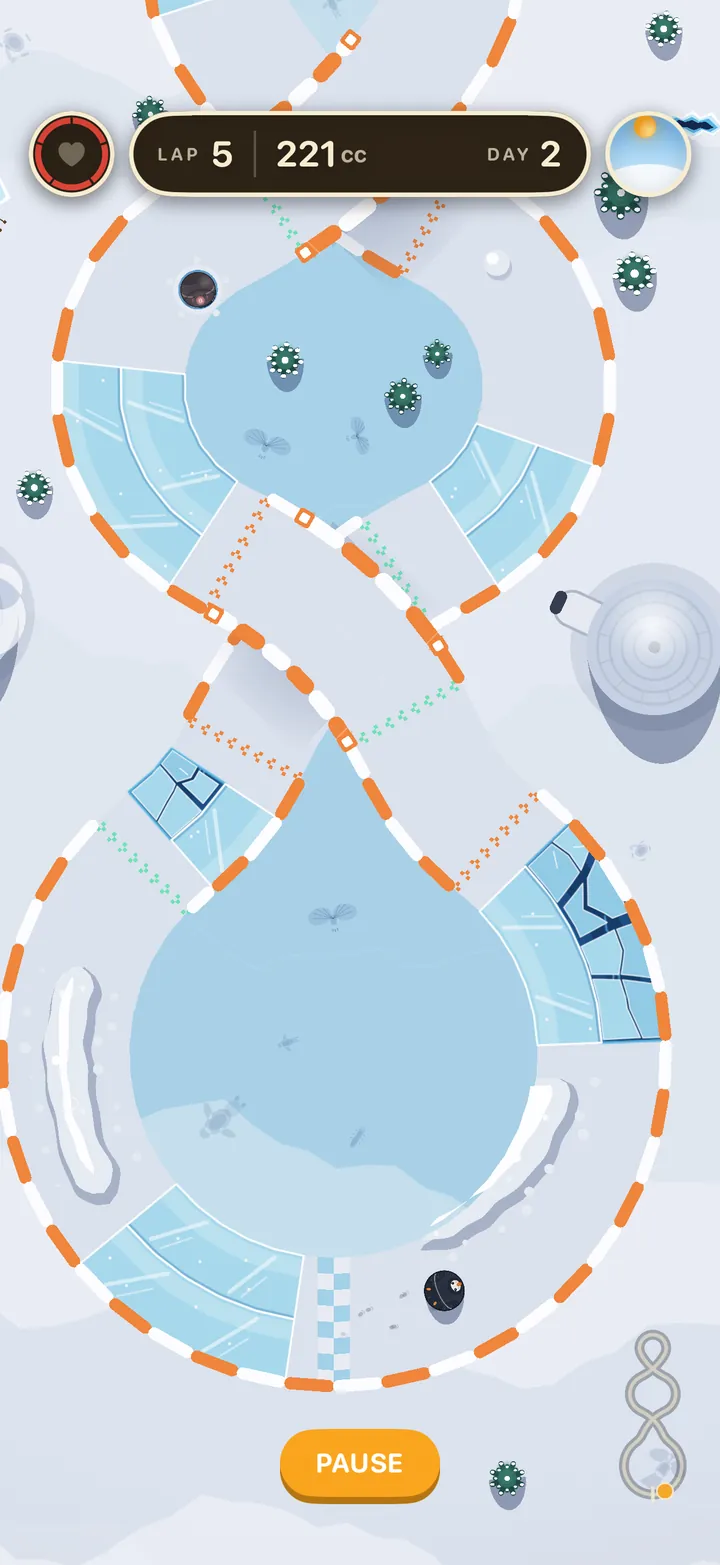
Frost Valley isn't in the game yet. It runs in my development builds, behind a switch. These screenshots are from those builds, so some details will change before it ships. But the heart of it is working, and I wanted to show it.
Every World Needs Its Own Idea
Each world in Animal Loop has something only it does. Dune Flats has switch gates that flip which way you turn. Coral Shallows has bridges and knots that cross over themselves. Fern Hollow has mud and mole tunnels. A fourth world needed its own idea too: something that changes how you drive, not only how the track looks.
Snow was the obvious setting, and slippery ice was the obvious mechanic. But the whole game is one tap. The only thing you control is when you turn. Ice that slides you around takes that one thing away, and a one-tap game stops feeling fair the moment it feels random.
So the ice in Frost Valley doesn't change how you move. It changes the road.
The ice doesn't change how you move. It changes the road.
Ice That Remembers Every Lap
The first time you meet it, the game explains cracking ice with one card:
Under that card, every piece of ice has a small life of its own:
- 01 PERFECTFresh, glassy ice
- 02 CRACKEDHit once, one hit left
- 03 BREAKINGGives way behind you
- 04 OPEN WATERFall in, lose a heart
- 05 FREEZING BACKA lap later, it heals
- Every pass counts. When more than half of your animal rolls over a piece, it takes a hit. Only one hit counts per lap, so you can't break a piece by wobbling on it.
- It breaks behind you, not under you. On its last hit, the ice gives way plate by plate, each plate only once it's fully behind you.
- Falling in costs a heart. If more than half of your animal ends up over open water, you splash, lose a heart, and get put back on dry road.
- It freezes back. Broken ice stays open for a lap, then heals as you come round, the break played in reverse.
Two lanes on one road
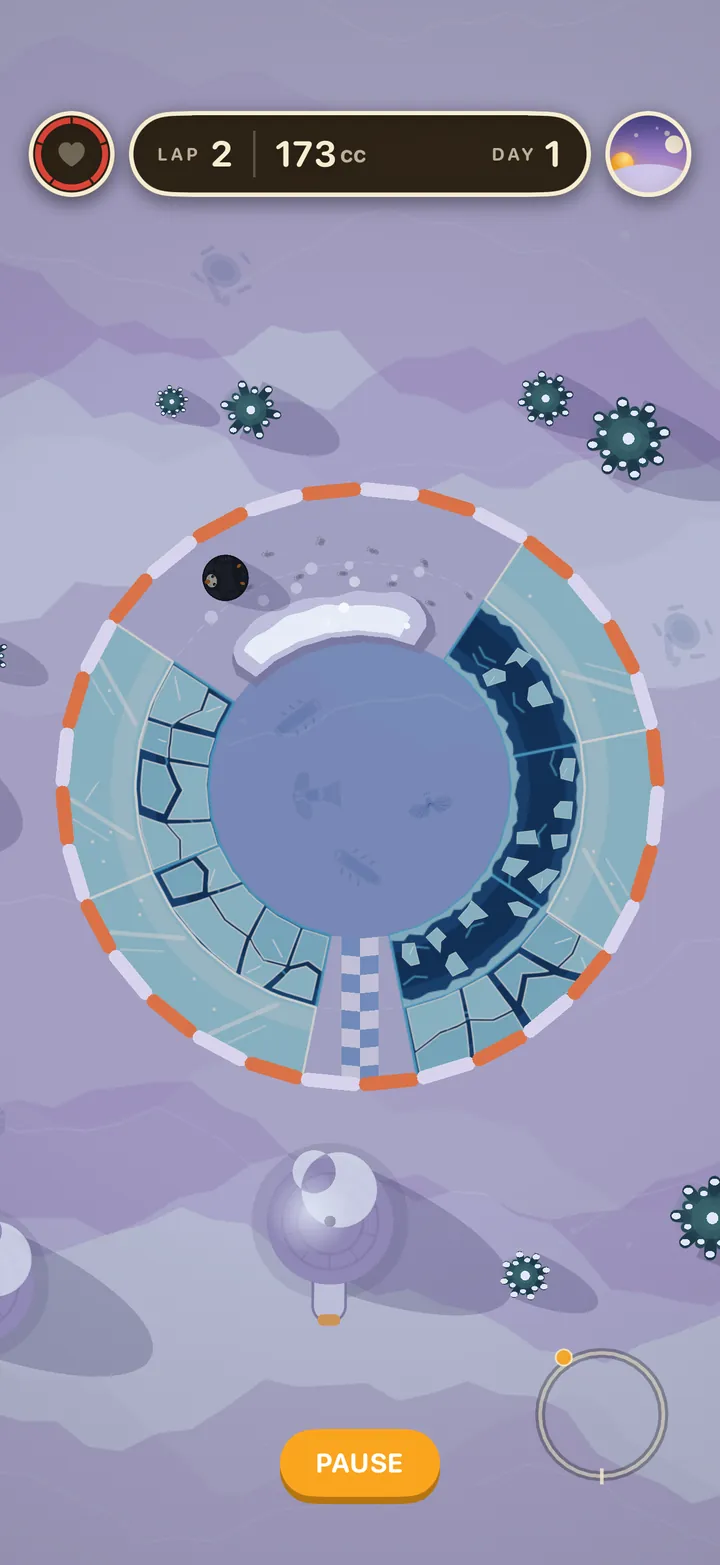
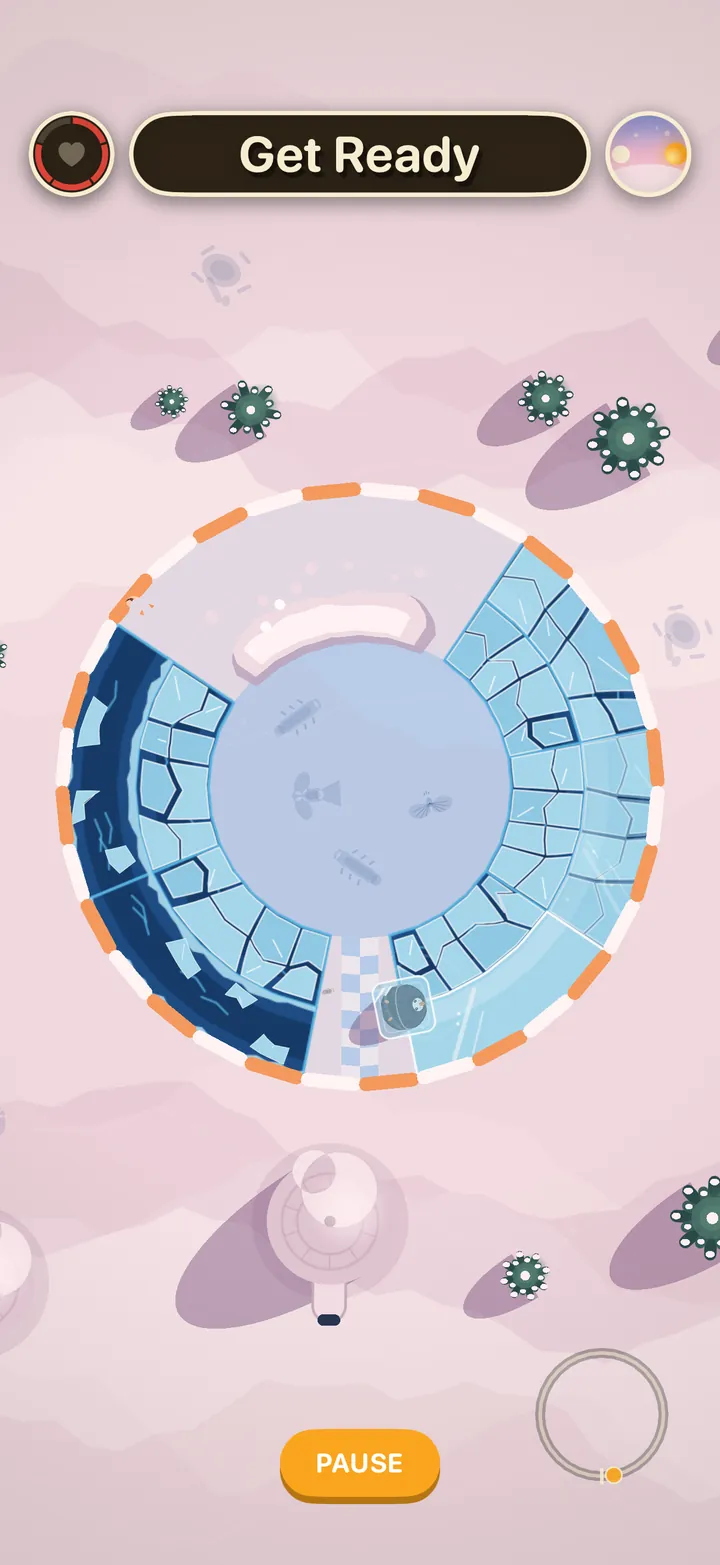
Almost every stretch of road is covered in ice, split down the middle into two lanes that run end to end with no gaps. Ride the same line every lap and you'll wear it out. The race becomes about reading which half is still good, and switching to it before your line gives way.
Why This Was So Hard
On paper, cracking ice is one sentence. Making it work took more rebuilds than anything else in the game. It had to look like ice, it had to be fair, and it had to fit on a phone. Each of those fought with the others.
It had to feel like ice
The first version went in on October 21. Each piece had one picture per stage (perfect, cracked, broken), and changing stage meant fading from one picture to the next. On its last hit, water spread through the piece behind you. It worked, but it looked like a sticker being swapped, not ice breaking.
By the end of the next day it had been reworked three more times. The version in these screenshots is built the way real ice is: a layer of open water, and on top of it the cracked plates as separate blocks. Each block moves through its own stages, so a hit sends cracks rippling out from your animal, the last hit breaks each plate as you roll past it, and freezing back grows the blocks floating in the water into plates again.
It had to be fair
A road that breaks can easily become a road that cheats you. So a lot of the work went into rules you'll never notice:
- You never drop through the ice you're on. Ice only breaks once it's fully behind you. If you fall in, it's because you rolled back onto water.
- The road never closes. Two lanes that can both break raise an obvious problem: what if both sides are water at once? A rule I call the freeze guard checks the road every time a piece breaks. If the water on each side would leave less than a racer's width to get through, the older water freezes back early. Left, right, left can never trap you.
- A rescue never drops you back in. After a fall, the game looks for the nearest checkpoint with dry road, and puts you in the middle of the dry side.
- Every piece gets the same lap. Freezing back is timed from each piece's own spot on the track, not from the finish line, so ice heals one lap after you broke it wherever it sits.
Two lanes needed a wider road
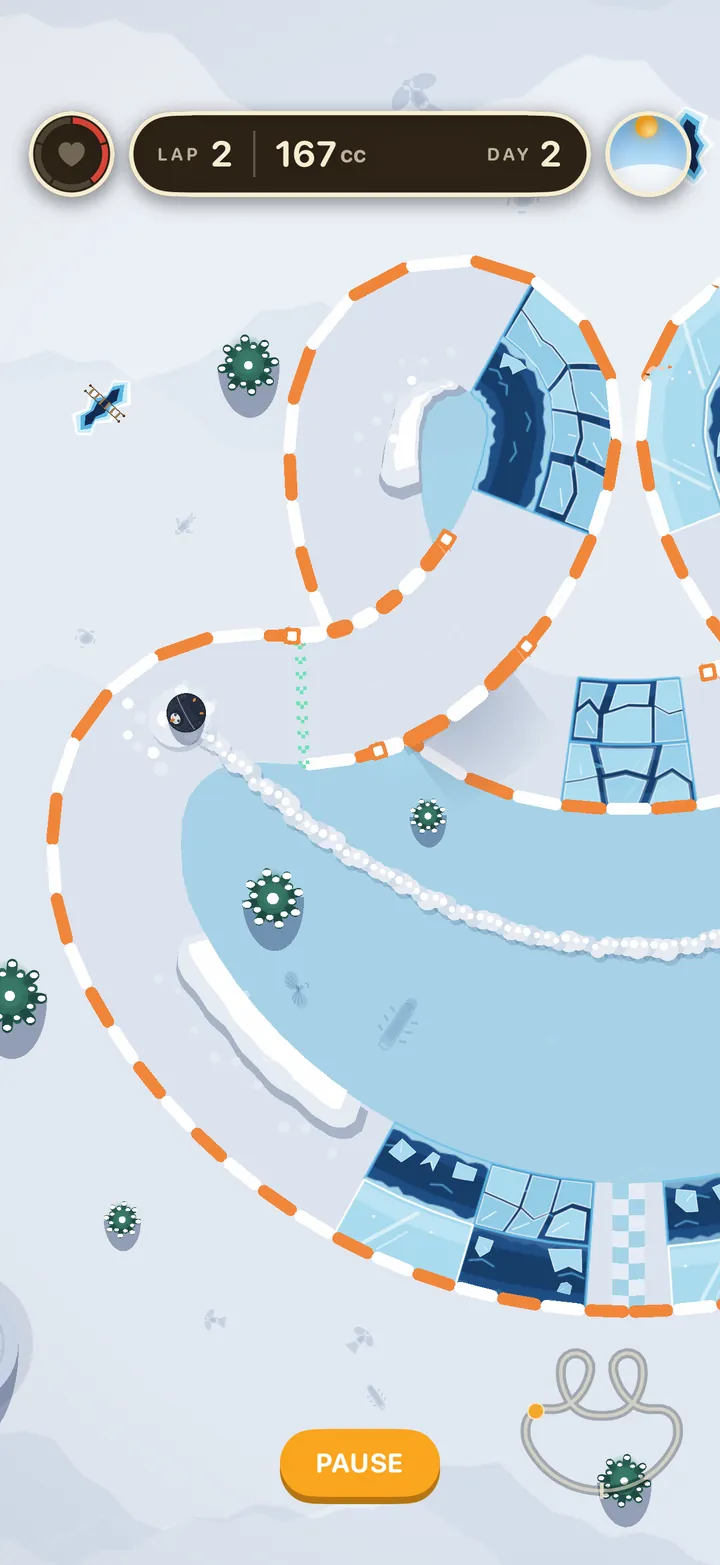
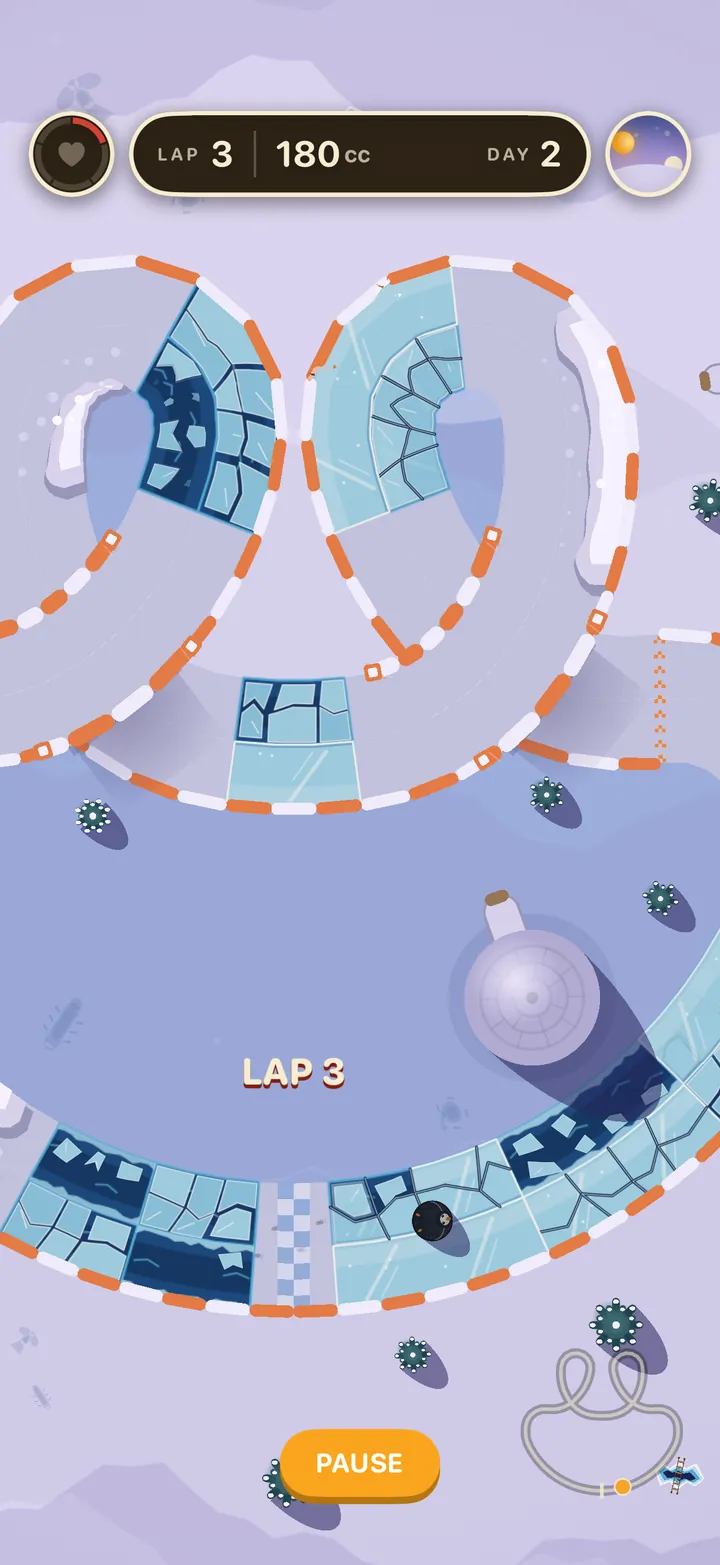
The nine tracks started at a normal road width. Once two lanes of ice went in, each lane was too tight for your animal to steer in. Every Frost Valley road had to widen from 38 to 52, the widest in the game, and every fir, igloo and crevasse that ended up too close to the road had to move or go.
Where It Stands
All nine tracks are laid out and playable, and this time they're named for the season.
- 1Snowball16 pieces of ice
- 2Ice Cube26 pieces of ice
- 3Ribbon Knot6 pieces of ice
- 4Cocoa Mug30 pieces of ice
- 5Gift Bag36 pieces of ice
- 6Snowman32 pieces of ice
- 7Star Knot8 pieces of ice
- 8Bell38 pieces of ice
- 9Snowflake44 pieces of ice
The ladder gets harder in several ways at once:
- Longer laps. Snowball is less than a quarter of the length of Snowflake.
- Thinner ice. On the early tracks, ice takes two hits before it breaks. By Bell, most of it breaks on the first, and on Snowflake every piece does.
- Ice that's already gone. From Cocoa Mug on, some tracks start with stretches already cracked or open.
- Slower healing. On Snowflake, broken ice stays open for two laps instead of one.
- Mole tunnels. The first four tracks have none. From Gift Bag on, every track has one: hit the mole and it digs you a shortcut.
- Switch gates. The first three tracks have none. Star Knot and Snowflake have ten each.
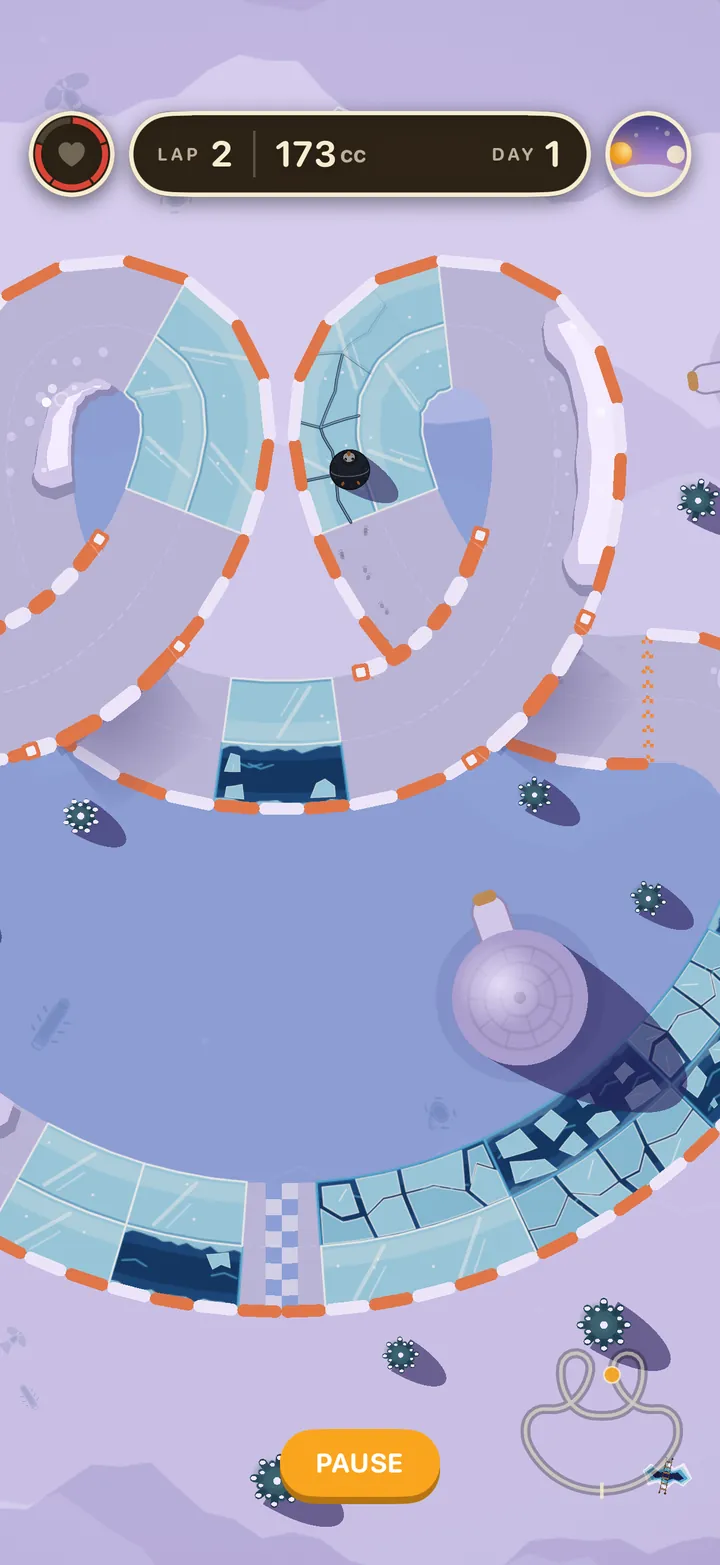
Across the nine tracks there are 236 pieces of ice. Placing them by hand wasn't realistic, so a small script lays the two lanes along every stretch where ice is allowed, clear of the start line, the switch gates, the tunnels and the crossings. Then I tune each track in the Level Creator, which got a new ICE tool for it: drag a piece's ends, keep its partner in the other lane lined up, choose whether it starts intact, cracked or broken, and get checks that stop a play-test if a piece breaks the rules.
WORKING NOW
- Cracking ice: hits, breaking, falls and freezing back
- The freeze guard and dry-road rescues
- All nine tracks, with ice, tunnels and switch gates
- The ICE tool in the Level Creator
- Snow colors from dawn to night, and the aurora
- Firs, igloos, crevasses and snow angels
- Frost Valley's own music
- The Penguin, redrawn
- Memory tests for every track
STILL TO DO
- Balancing the ice ladder, track by track
- Game Center leaderboard and achievement
- Frost Valley's app icon
- Polish from play-testing
Snow Is Only White at Noon
The hard part of drawing a snow world is that white is boring, and real snow is almost never just white. It takes the color of the sky. So Frost Valley's snow follows the game's day/night cycle: pink at dawn, white only at noon, lilac at dusk and navy at night. The one warm color that holds all day is the orange of the track's border markers. You can see it in the screenshots above.
- DAWN
- NOON
- DUSK
- NIGHT
At night, the wind streaks across the snowfield turn into aurora curtains, green with a magenta fringe, and the lit side of every snowbank glows aurora green. For most of its development this world was called Aurora Drift. The name changed. The aurora stayed.
Frost Valley gets its own music, too. The music in Animal Loop is played live as you race, and each world has its own instruments. Here, a music box carries the melody over a warm pad, with an acoustic bass underneath.
A penguin at the finish
Every world ends in a Grand Prix against its rival animal: the Armadillo in Dune Flats, the Puffer in Coral Shallows, the Ladybug in Fern Hollow. Frost Valley's rival is the Penguin, a toboggan racer, and it's the one rolling through every screenshot here. Beat it across all nine tracks and it joins your roster.